
Gallbladder Cancer is an uncommon type of cancer that frequently shows no symptoms in its early stages. Because of this, the majority of cases go undiagnosed until cancer has spread and become difficult to cure.
The Gallbladder, a little organ beneath the liver that collects and concentrates bile, can develop Gallbladder cancer. Sometimes Gallbladder Cancer is discovered by accident during Gallbladder surgery or after imaging for other illnesses since early gallbladder cancer may generate little or no symptoms.
The treatment of Gallbladder cancer depends on the stage of the disease, location and spread of the tumour, whether it can be completely removed with surgery, and the patient's overall health. Treatment may include Surgery, Chemotherapy, Radiation Therapy, Immunotherapy, Targeted Therapy, and Supportive or Palliative Care.
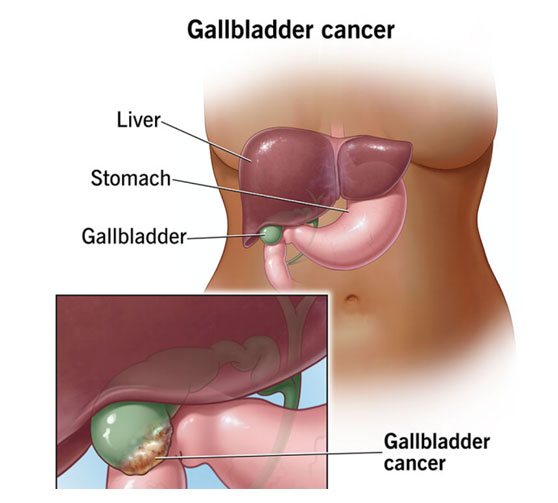
The exact cause of gallbladder cancer is not always known. It develops when abnormal cells in the gallbladder begin to grow uncontrollably and form a tumour. Certain medical conditions and long-term factors may increase the risk of developing gallbladder cancer.
Gallbladder cancer may not produce obvious symptoms in its early stages. As the disease progresses, symptoms may include:
Jaundice, abdominal pain and fever are among the symptoms that may occur with gallbladder cancer. These symptoms can also occur with gallstones, infections and other digestive conditions. Persistent or unexplained symptoms should therefore be evaluated by a qualified doctor.
Factors that may increase the risk of gallbladder cancer include:
Having one or more risk factors does not mean that cancer will develop. Medical evaluation is important when symptoms or abnormalities are present.
Doctors may use several tests to diagnose gallbladder cancer and determine how far it has spread. Common diagnostic tests include:
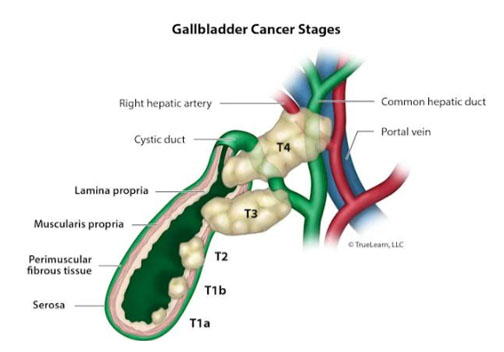
Staging determines how extensively gallbladder cancer has developed and helps doctors select an appropriate treatment approach. Gallbladder cancer may broadly be described as:
The cancer is limited to the gallbladder and has not significantly spread to surrounding tissues.
Cancer has spread beyond the muscle layer to the connective tissue layers of your gallbladder.
Cancer has spread to the outer (serosal) layer of your gallbladder or your liver or nearby organs. It may have spread to lymph nodes.
Cancer has spread to more than three nearby lymph nodes or to blood vessels. It may have spread to distant organs (Metastatic gallbladder cancer).
The exact staging system is more detailed and is based on the tumour, lymph nodes and distant spread. Treatment decisions are generally influenced by whether cancer is resectable or unresectable.
Treatment is individualized according to the stage and overall health of the patient.
Extended Cholecystectomy: For many resectable gallbladder cancers, an Extended Cholecystectomy may be recommended rather than removing only the gallbladder. Depending on the extent of the disease, the operation may include:
Recovery depends on the type and extent of surgery and the patient's general health. During recovery, patients may require pain management, monitoring for infection/bleeding, liver-function monitoring, gradual return to normal eating, wound care, and follow-up consultations. Major gallbladder cancer surgery can require several weeks of recovery.
Gallbladder cancer can be difficult to detect at an early stage because initial symptoms may be absent or nonspecific. Early evaluation of persistent symptoms and suspicious gallbladder abnormalities can help determine whether further investigation is necessary.
Because treatment can involve complex surgery and multiple cancer therapies, patients may benefit from evaluation by a multidisciplinary cancer team, which may include a surgical oncologist, medical oncologist, radiation oncologist, gastroenterologist, radiologist and other specialists.
Gallbladder cancer may be curable in some patients, particularly when it is detected at a stage where the cancer can be completely removed with surgery. Advanced or metastatic cancer is generally treated with the goal of controlling the disease, prolonging survival and managing symptoms.
For resectable gallbladder cancer, surgery is generally the main treatment and may provide the best chance of cure. Chemotherapy, radiation or other treatments may be recommended depending on the stage and individual circumstances.
Yes. When surgery is not appropriate or the cancer cannot be completely removed, treatment may include chemotherapy, immunotherapy, targeted therapy, radiation therapy and supportive treatments.
Depending on the stage and location, surgery may range from gallbladder removal to an extended cholecystectomy involving nearby liver tissue and lymph nodes. More extensive surgery may be required in selected cases.
Not every patient requires the same treatment. Depending on the pathology and risk of recurrence, doctors may recommend chemotherapy after surgery, sometimes with radiation therapy.
Recovery varies according to the extent of surgery and the patient's overall health. Simple gallbladder surgery may have a shorter recovery, while extended cancer surgery can require several weeks or longer.
Yes. Like other cancers, gallbladder cancer can recur after treatment. Regular follow-up appointments and investigations are important for monitoring recovery and detecting recurrence.
If the cancer has spread extensively and cannot be removed completely, treatment may focus on controlling cancer growth, relieving symptoms and maintaining quality of life. Chemotherapy, immunotherapy, targeted therapy, radiation and procedures to relieve bile duct blockage may be considered.
Persistent abdominal pain, unexplained weight loss, jaundice, loss of appetite, fever or other unexplained digestive symptoms should be medically evaluated. These symptoms do not necessarily indicate cancer, but timely assessment can help identify the underlying cause.
Choosing the right cancer centre is important because gallbladder cancer may require specialized hepatobiliary and surgical oncology expertise, particularly when the disease involves nearby liver tissue, bile ducts or lymph nodes. Sanjivani Cancer Centre provides hepatobiliary surgery, GI cancer surgery and advanced laparoscopic procedures as part of its cancer-care services.
Consult the Sanjivani Cancer Centre team to understand your diagnosis, stage and available treatment options.
Visit our clinics across various locations for expert consultation