
Mouth cancer, also known as oral cancer, is a type of cancer that develops in the tissues of the mouth. It can affect the lips, tongue, gums, inner cheeks, floor of the mouth, roof of the mouth, and other oral tissues. Most oral cancers develop from the squamous cells lining the mouth.
Early diagnosis and appropriate treatment can improve treatment outcomes. Persistent mouth ulcers, red or white patches, lumps, or difficulty swallowing should be evaluated by a qualified healthcare professional, particularly if they do not heal within two weeks.
Mouth cancer occurs when abnormal cells in the oral cavity grow uncontrollably and form a malignant tumour. The most common type is squamous cell carcinoma, which develops in thin, flat cells lining the mouth.
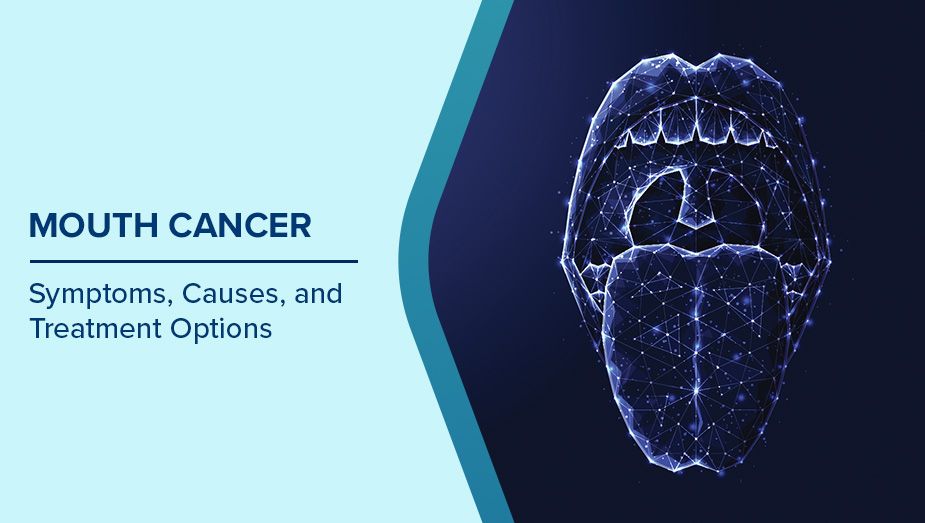
Mouth cancer can develop in different areas, including:
Early evaluation can help identify the disease and determine the most suitable treatment approach. Mouth cancer symptoms may resemble common dental or oral conditions. However, symptoms that persist or worsen should not be ignored.
Common warning signs include:
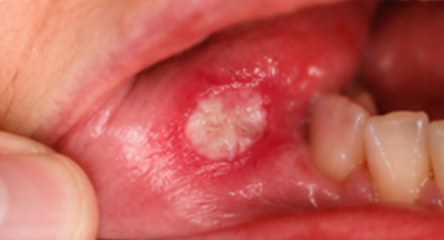
A mouth ulcer or sore that does not heal.
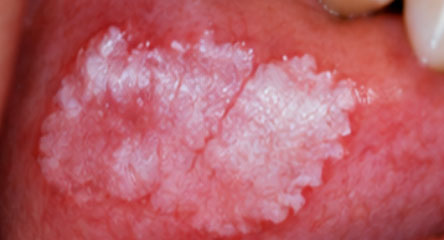
A red or white patch inside the mouth.
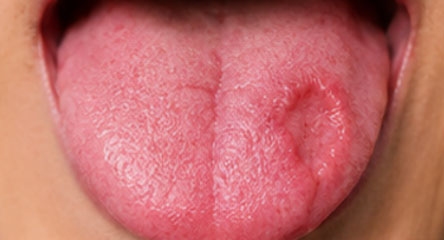
A lump, thickened area, or unusual growth.
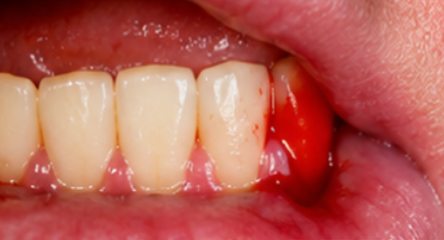
Unexplained bleeding in the mouth.
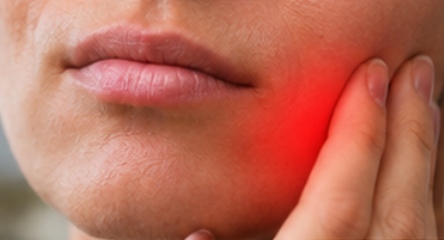
Persistent pain in the mouth or tongue.

Difficulty chewing, swallowing, or moving the tongue.
Numbness in the tongue, lips, or other parts of the mouth.

A persistent bad breath.
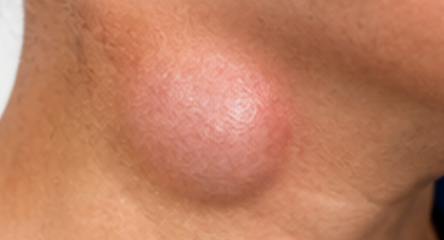
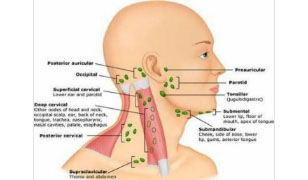
A lump in the neck.
Mouth cancer develops when abnormal cells grow uncontrollably in the tissues of the oral cavity. Several factors may increase the risk of developing oral cancer.
Common risk factors include:
Not everyone with these risk factors develops cancer, and mouth cancer can sometimes occur without an obvious risk factor. Avoiding tobacco and limiting alcohol consumption can help reduce risk.
Accurate diagnosis helps specialists determine the extent of the disease and select an appropriate treatment plan. The evaluation may include:
Not every patient requires every test. Investigations are selected according to the clinical findings and specialist assessment.
Understanding the stages of mouth cancer helps doctors determine how far the cancer has spread and plan suitable treatment. The stage is usually determined by the size of the tumour, involvement of nearby lymph nodes in the neck, and whether the cancer has spread to distant organs.
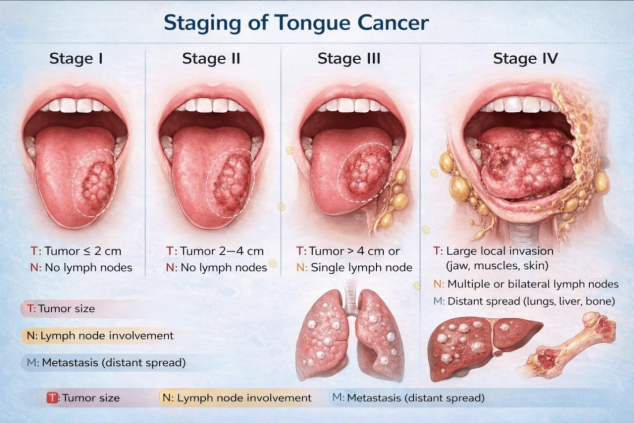
Abnormal cells are present only in the top layer of the lining of the lips or mouth and have not spread into deeper tissues.
Treatment: Often surgery to remove the abnormal tissue.
The tumour is 2 cm or smaller, with a depth of invasion of 5 mm or less. It has not spread to nearby lymph nodes or distant organs.
Treatment: Usually surgery; selected cases may require other treatment.
The tumour is either 2 cm or smaller with a depth of invasion between 5 mm and 10 mm, or larger than 2 cm up to 4 cm with a depth of invasion of 10 mm or less; no lymph node spread yet.
Treatment: Surgery, with radiotherapy considered depending on the findings.
The tumour may be larger or deeper, or the cancer may have spread to a nearby lymph node in the neck.
Treatment: Surgery and/or radiotherapy, sometimes combined with chemotherapy.
Cancer may have invaded nearby structures, such as the jawbone, or spread extensively to neck lymph nodes. Stage IVC indicates spread to distant organs.
Treatment: May include surgery, radiotherapy, chemotherapy, immunotherapy or a combination, depending on the extent of disease.
Mouth cancer screening is a preliminary examination performed by a dentist, doctor, or trained healthcare professional to look for abnormal changes in the oral tissues. It is particularly important for people who use tobacco, chew betel quid or supari, smoke, or consume alcohol.
Mouth cancer screening is the process of examining the mouth, tongue, gums, inner cheeks, floor of the mouth, and lips to identify suspicious lesions or early signs of oral cancer. Early detection can help patients receive timely diagnosis and treatment.
Screening or an oral examination is especially important for people who:
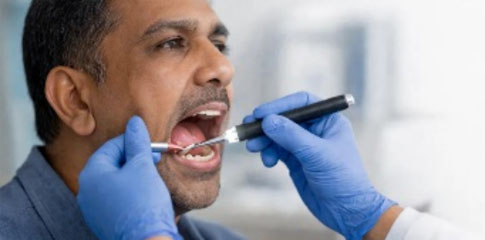
The doctor examines the lips, tongue, gums, inner cheeks, palate and floor of the mouth for unusual patches, ulcers, sores or lumps.
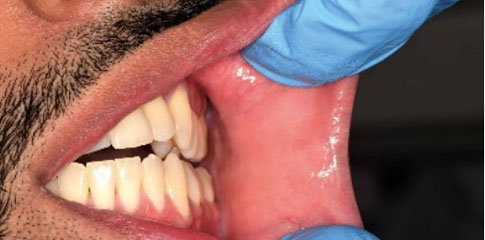
The healthcare professional may gently feel the mouth, jaw and neck to check for abnormal thickening, lumps or swollen lymph nodes.
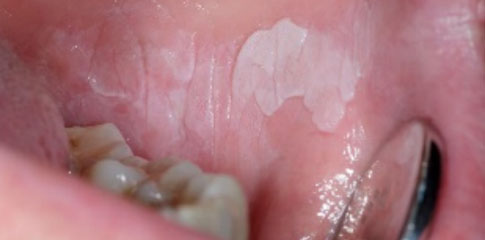
If an unusual lesion is found, a specialist evaluates its size, appearance, location and duration. Additional investigations may be advised.
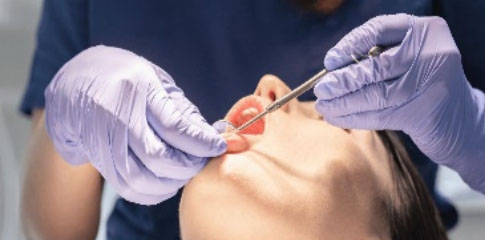
A small tissue sample is examined in a laboratory. A biopsy is the standard way to confirm or rule out cancer in a suspicious lesion.
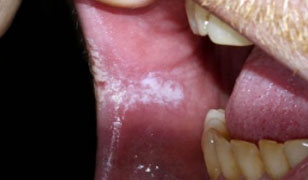 White or red patches
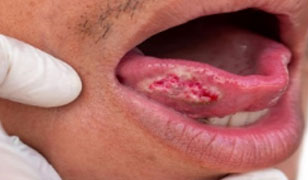 Non-healing mouth ulcer
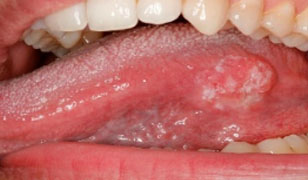 Unusual lump or thickening
 Lump in the neck
The treatment of mouth cancer depends on the tumour's location, stage, pathology findings, and the patient's overall health. The treating specialists may recommend one or more of the following options.
Surgery may be recommended to remove the cancerous growth along with an appropriate margin of surrounding tissue. Depending on the extent of the disease, treatment may also involve removal of affected lymph nodes in the neck.
For larger tumours, reconstructive surgery may be considered to restore the structure and function of the mouth. The surgical approach is individualized to achieve cancer control while preserving speech, chewing, and swallowing as much as possible.
Radiation therapy uses high-energy radiation to destroy cancer cells. It may be recommended after surgery when there is a significant risk of recurrence, or as part of treatment for selected patients who are not suitable for surgery or who require a non-surgical approach.
Chemotherapy uses medicines to destroy or control cancer cells. It may be combined with radiation therapy for certain locally advanced cancers or used in other treatment settings, depending on the disease stage and clinical assessment.
For selected patients, targeted therapy or immunotherapy may be considered based on the tumour's characteristics, previous treatments, and eligibility criteria. These treatments are not suitable for every patient.
Treatment may affect speech, swallowing, nutrition, and oral health. Rehabilitation may include speech and swallowing therapy, nutritional support, dental evaluation, pain management, and psychological support as needed.
Choosing an appropriate cancer care centre is an important step in the diagnosis and management of oral cancer. At Sanjivani Cancer Centre, patients can seek guidance regarding the evaluation and management of mouth cancer, including:
The recommended treatment plan should be discussed with the treating cancer specialist after reviewing the patient's reports, diagnosis, and individual medical needs.
Mouth cancer can be treated successfully in many cases, particularly when diagnosed at an early stage. The likelihood of successful treatment depends on the stage, tumour characteristics, overall health, and response to treatment.
There is no single best treatment for every patient. Surgery is commonly used for many oral cavity cancers, while radiation therapy, chemotherapy, targeted therapy, or immunotherapy may be recommended in selected situations. The treatment plan depends on the individual diagnosis.
Early warning signs may include a non-healing mouth ulcer, a persistent red or white patch, a lump, unexplained bleeding, or difficulty moving the tongue. Persistent symptoms should be evaluated by a healthcare professional.
No. Surgery is a common treatment for oral cavity cancer, but the most appropriate approach depends on the tumour, stage, and patient's condition. Selected patients may receive radiation-based or other treatments according to specialist recommendations.
Recovery varies according to the size and location of the tumour, the extent of surgery, and whether reconstruction or additional treatment is needed. The treating team can provide an individual recovery plan.
Yes, recurrence is possible. Regular follow-up appointments are important to monitor healing, detect recurrence early, and address any new symptoms.
Consult a healthcare professional if you have a mouth ulcer that persists for more than two to three weeks, an unexplained lump, a persistent red or white patch, or difficulty swallowing. Seek evaluation sooner if symptoms are worsening or bleeding occurs.
Early evaluation of suspicious oral symptoms can help identify cancer at an earlier stage. If you have persistent mouth ulcers, unusual patches, lumps, or other concerning symptoms, consult a qualified specialist for examination and appropriate diagnostic testing.
Sanjivani Cancer Centre can be approached for guidance on mouth cancer evaluation, treatment options, and individualized cancer care. Contact the centre directly for appointment availability and details of its treatment services.
Visit our clinics across various locations for expert consultation