
Lung Cancer is a type of cancer that develops in the lungs clustering abnormal cells to form a tumour. Cancer cells grow rapidly damaging healthy Lung tissues. This risk occurs when a person breathe toxic substances or is exposed to dangerous elements.
These types of tumours are called as malignant tumours which grows vigorously. Lung Cancer tends to develop fast and is the life-threatening Cancer and very difficult to treat. Lung Cancer can affect certain body organs like Liver, Adrenal Glands, Bones and Brain.
Lung cancers can grow in any part of the lung, but most percent of Lung cancers arise from the epithelial cells (the cells lining the larger and smaller airways (bronchi and bronchioles). Lung cancers are sometimes called bronchogenic cancers or bronchogenic carcinomas. Cancers also can arise from the pleura (called mesotheliomas) or rarely from supporting tissues within the lungs, for example, the blood vessels.
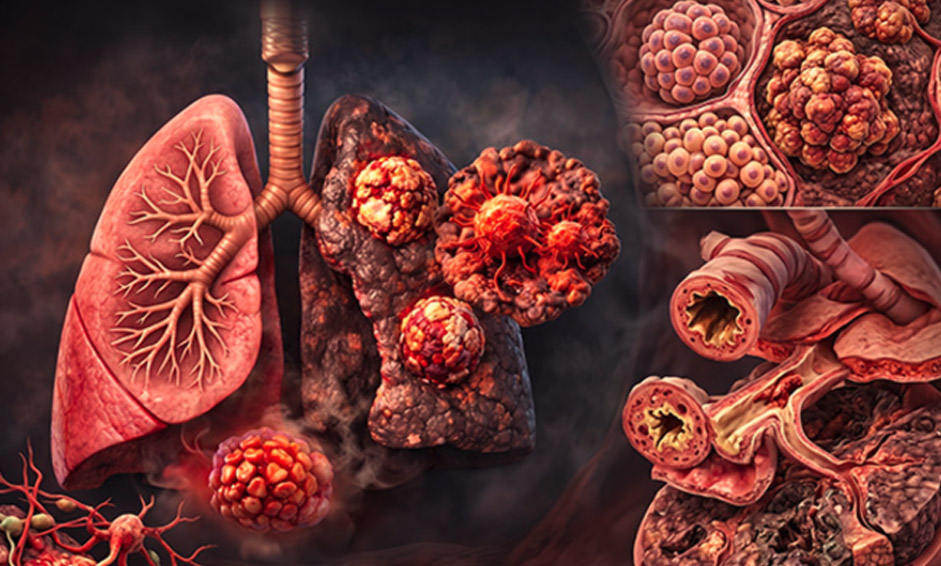
Lung cancer is majorly caused due to frequent cigarette smoking and daily consumption of tobacco. The threat of lung cancer grows with the number of cigarettes smoked regularly and the time over which smoking has occurred.
Like cigarette smoking, Vaping (inhaling of a vapor created by an electronic cigarette or other vaping device) to insert chemicals deep into the lung tissue, which can increase a risk for Cancer. Marijuana smoke also carry levels of chemicals and tar which is also a concern of risk for cancer and lung disease.
Passive smoking (inhalation of tobacco smoke by non-smokers) who accompany the smokers (whether in the house, office or outside) also develop risk of lung cancer. The risk for the non-smokers can increase with the amount of exposure to the number of cigarettes smoked by the Smokers in the house.
Symptoms of lung cancer may vary depending upon the spread of the tumour.
Warning signs of lung cancer may not be easily identified nor may show other symptoms or cause pain in some cases.
A person with lung cancer may have the following kinds of symptoms:
In up to 25% of people who get lung cancer, the cancer is first discovered on a routine chest X-ray or CT scan as a solitary small mass sometimes called a coin lesion, since on a two-dimensional X-ray or CT scan, the round tumour looks like a coin. These patients with small, single masses often report no symptoms at the time of the cancer discovery.
The growth of the cancer and invasion of lung tissues and surrounding tissue may interfere with breathing, leading to symptoms such as:
If the cancer has invaded nerves, for example, it may cause:
Lung cancer that has spread to the bones may produce excruciating pain at the sites of bone involvement. Cancer that has spread to the brain may cause a number of neurologic symptoms that may include:
Lung cancer treatment generally involves cancer removal and combinations of these treatments like:
Nowadays, immunotherapy treatments and targeted therapies are becoming more familiar. The treatment to be adopted for a particular patient is based on the location and spread of the tumour, while also considering the overall health of the patient.
Depending on the type of cancer, doctors may prescribe Curative therapy (removal or eradication of a cancer) or Palliative therapy (measures that are unable to cure a cancer but can reduce pain and suffering). Doctors may suggest going for additional therapy known as adjuvant therapy to boost the effects of the primary therapy.
Adjuvant therapy is often given after the removal of a tumour through surgery to kill any tumour cells that remain even after the procedure.
Doctors normally adopt surgery to remove stage I or sometimes stage II cancer. About 10% - 30% of lung cancers can be removed with the help of surgery. But many times, the tumours have already spread and can recur later, hence surgery can’t cure the total cancer.
The surgery depends upon the size and location of the tumour in the lungs. Surgeons open the chest wall and remove a portion of one lobe known as wedge resection, a lobectomy i.e., removal of one lobe, or may remove the entire lung known as pneumonectomy. Sometimes the surgeons perform lymphadenectomy (removal of lymph nodes in the region of the lungs).
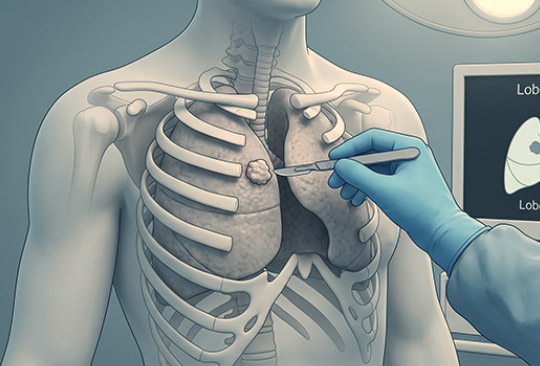
Major surgical procedures for lung cancer require general anaesthesia, hospitalization, and follow-up care for weeks to months. Complications due to bleeding, infection, and complications of general anaesthesia may prove risky at the time of surgery.
It is essential to note that if the person is suffering from other serious health conditions like severe heart or lung disease, then surgery may not be possible as it would limit their ability to survive an operation.
Radiation therapy is adapted for the three main reasons:
Radiation therapy commonly only narrows a tumour or restricts its growth when given as a sole therapy. A patient's life span increases if radiation therapy is combined with chemotherapy.
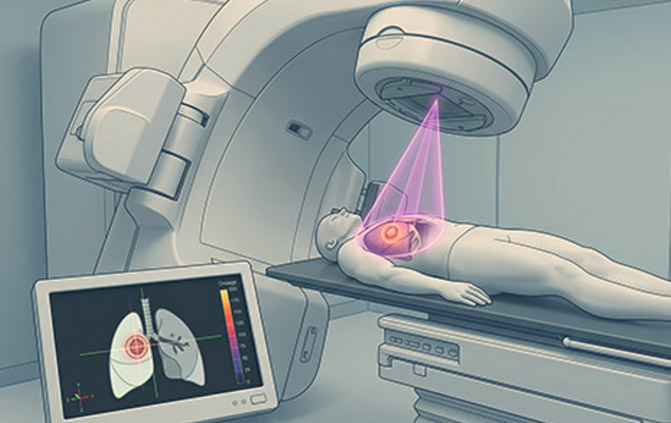
Doctors don't prescribe radiotherapy to patients having chronic lung disease in addition to lung cancer, as the radiation is likely to decrease the functioning of the lungs.
Stereotactic Radiosurgery (a type of external radiation therapy) is periodically used to treat single brain metastases. In this procedure, multiple beams of radiation coming from different directions are focused on the tumour over a few minutes to hours while the head is held in place by a rigid frame. This decreases the dose of radiation that is obtained by noncancerous tissues.
In the case of external radiation therapy, before the treatment a process called simulation is essential. With the help of computers, CT scans, and precise measurements, the simulation process traces the exact location where radiation is to be given. The external radiation treatment itself normally is done four or five days a week for some weeks.
In chemotherapy, drugs restrict the development of cancer cells by killing them or preventing them from dividing. Chemotherapy may be given solely, as support to surgical therapy, or in combination with radiotherapy. The category of drugs known as platinum-based drugs has been the most functional in the treatment of lung cancers.
Chemotherapy treatment may be given as an intravenous infusion, in the form of pills, or even as a combination of the two. A combination of drugs is given in a cycle of treatments, for a period of weeks to months, with intervals in between the cycles.
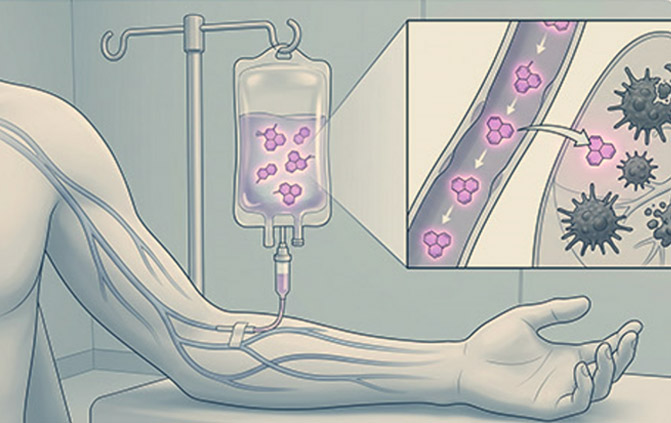
The side effects of chemotherapy differ from individual to individual as per the dosage and combination of drugs used. Nowadays, supportive medications have improved, which help prevent many side effects of chemotherapy. The side effects generally disappear during the recovery phase of the treatment or after its completion.
For example, a chemotherapy port (also known as a "port-a-cath") is a small device that is implanted under your skin to allow easy access to your bloodstream. A port can be used to draw blood and infuse chemotherapy drugs. It can also be used if you need transfusions of red blood cells or platelets.
Advantages of chemo port over traditional IV line:
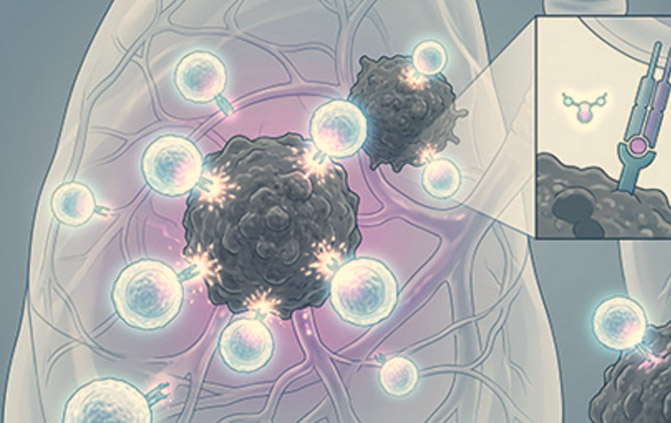
Immunotherapy may be a powerful alternative for some patients suffering from advanced lung cancers. Immunotherapy drugs work by vitalizing the activity of the immune system against tumour cells.
Radiofrequency ablation is a secured and constructive treatment for patients having primary and secondary lung tumours increasing their survival rate.
Radiofrequency ablation is an option to surgery which is sometimes used for small tumours which are located near the outside of the lungs.
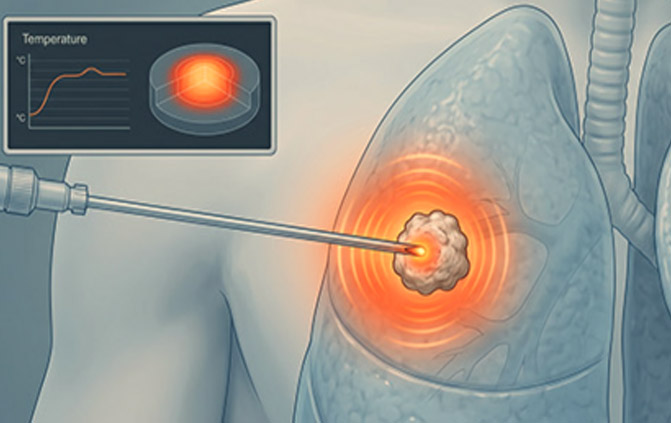
Radiofrequency is a sort of electrical power which heats up the tumour and kills the cancer cells. During the radiofrequency ablation treatment procedure, a needle is inserted through the skin into the cancer, with the help of CT scanning. Radiofrequency (electrical) energy is then transmitted to the tip of the needle where it produces heat in the tissues, killing the cancerous tissue and closing small blood vessels that supply the cancer.
Visit our clinics across various locations for expert consultation