
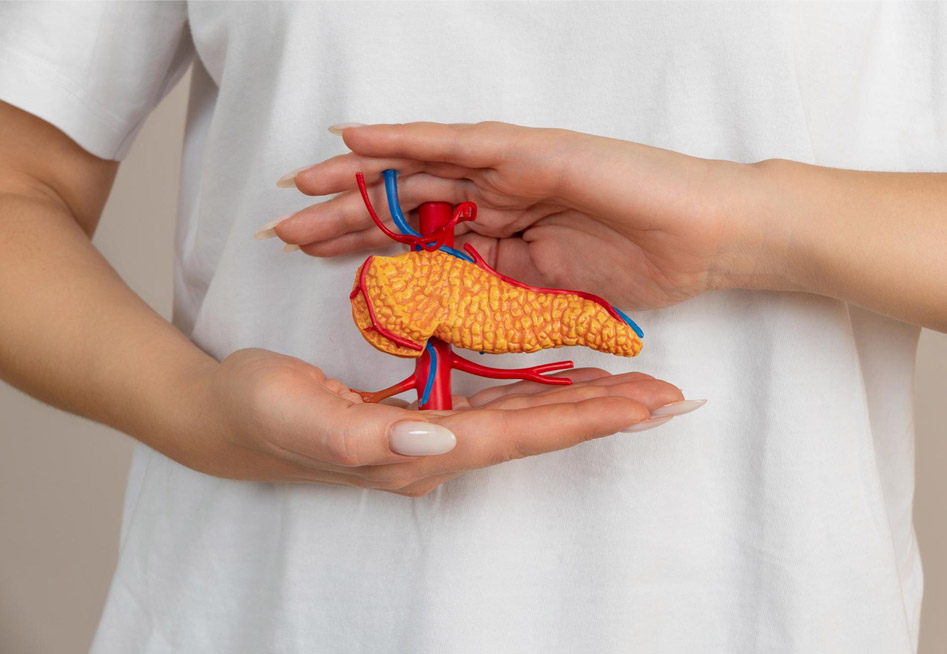
Pancreatic cancer crops up when cells in the pancreas (a glandular organ behind the stomach) begin to increase exponentially beyond control and form a lump. These Pancreatic cancerous cells have the capacity to attack other parts of the body.
Pancreatic cancer is difficult to detect as symptoms develop only after the disease has reached an advance stage and began to spread in other parts of the body.
And when the cancer is large enough it causes symptoms like:
Pancreatic cancer barely arises before the age of 40. Risk factors for pancreatic cancer include smoking, tobacco chewing, diabetes, obesity, and specific genetic states.
The possibility of growing pancreatic cancer is lesser within the non-smokers and people who are physically strong and restrict their intake of red/ processed meat.
Pancreatic Cancer diagnosis begins with a thorough physical exam and a complete medical history. The following may help to confirm the cancer.
Possible tests include -
Blood tests can detect a chemical that pancreatic cancer cells release into the blood. Liver function tests check for bile duct blockage.
The doctor may request imaging tests to detect if a tumor is present, and, if so, to and see how far the cancer has spread.
Common imaging tests include :
Modified endoscopes with surgical instruments attached to them or passed through them can be used to carry out certain types of surgery.
Next, the doctor will assess the stage of the cancer, or how far the cancer has spread, to determine which treatment options are suitable.
The stage depends on :
There are cancerous cells in the top layers of pancreatic duct cells. They have not invaded deeper tissues or spread outside of the pancreas.
The cancer that has spread to distant sites throughout the body.
At stage 0, effective treatment is possible. At stage IV, tumors have spread to distant organs. A doctor would only recommend surgery to relieve pain or unblock ducts.
Pancreatic cancer can be treated with surgery, chemotherapy, radiotherapy, palliative care, or even with a combination of these treatments.
Cancer treatment depends on a variety of factors:
Surgery, radiation, and chemotherapy are the most common treatment options.
The aim of treatment is to:
Visit our clinics across various locations for expert consultation