
Small Intestine Cancer is one of the most uncommon kinds of Cancer in the Gastrointestinal Tract. Multiple procedures and tests are frequently required to determine a diagnosis. Your prognosis is determined by several factors, including the type of cancer, stage, and location of the tumor in your small intestine.
When malignant (cancerous) cells develop in your small intestine or small bowel, it can lead to small intestine cancer. Your body's digestive system, which also comprises your gastrointestinal (GI) tract and organs like your liver, pancreas, and gallbladder, contains your small intestine. The GI tract, which consists of your esophagus, stomach, small intestine, and large intestine (colon), includes your small intestine. Your stomach and large intestine are joined by your small intestine.
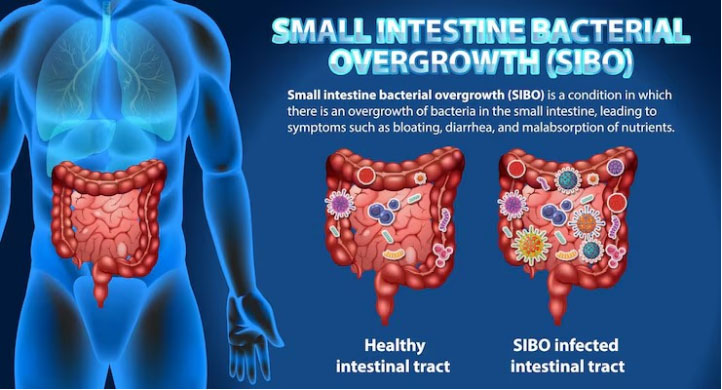
Your small intestine is composed of three parts:
The first segment of your intestine, located near your stomach.
The middle portion of your small intestine.
The last and longest part of your small intestine.
Most small intestinal cancers develop in either the duodenum or the ileum.
There are several types of small intestine cancer, including Adenocarcinoma, Neuroendocrine Tumors, Gastrointestinal Stromal Tumors (GIST), Lymphoma And Sarcoma. The different types of small intestine cancer are classified based on the type of cells where the cancer starts.
Small intestine cancer occurs when abnormal cells in the small intestine begin to grow uncontrollably. The exact cause is not always known. However, certain conditions and risk factors may increase the likelihood of developing the disease.
Mutations in certain genes can cause intestinal cells to grow and divide abnormally.
Having close relatives with certain inherited cancer syndromes may increase the risk.
Long-standing inflammation of the small intestine can increase the risk of small bowel cancer.
Chronic inflammation associated with celiac disease may increase the risk of certain small intestine cancers.
Conditions such as Lynch syndrome, familial adenomatous polyposis (FAP), Peutz-Jeghers syndrome, and other hereditary disorders may increase risk.
The risk generally increases with age.
A history of certain cancers affecting the digestive tract may be associated with an increased risk.
Certain immune disorders or immunosuppressive treatments may increase the risk of some small intestine cancers.
Small intestine cancer may not cause noticeable symptoms in its early stages. When symptoms develop, they can vary depending on the location and size of the tumour. Common Symptoms include:
Diagnosing small intestine cancer usually involves a combination of medical history, physical examination, imaging tests, endoscopic procedures, and laboratory tests. Since symptoms can resemble other digestive disorders, several tests may be needed to confirm the diagnosis and determine whether the cancer has spread.
Treatment for small intestine cancer depends on the type of cancer, tumour location, stage, whether it can be completely removed, overall health, and whether it has spread to other organs. Surgery is the main treatment when the tumour is operable.
Symptoms may include Abdominal pain or cramps, Unexplained weight loss, Nausea or vomiting, Fatigue or weakness, Blood in the stool or dark-colored stools, Abdominal swelling or a lump, Changes in bowel habits. These symptoms can also occur with many non-cancerous conditions.
There is usually no single identifiable cause. Certain conditions may increase the risk, including Crohn's disease, celiac disease, familial adenomatous polyposis (FAP), and some dietary and health-related factors.
Depending on the suspected cancer and its location, doctors may recommend CT scans, MRI, PET scans, endoscopy, capsule endoscopy, or other specialized tests.
In some patients, particularly when the cancer is localized and can be completely removed, treatment may potentially be curative. Prognosis depends on factors such as cancer type, stage, spread, overall health, and whether complete surgical removal is possible.
Surgery is commonly the main treatment when the tumor can be completely removed. Depending on the tumor's location, the surgeon may remove a section of the small intestine and nearby lymph nodes or, for some duodenal tumors, perform a more extensive operation such as a Whipple procedure.
Yes. Chemotherapy may be recommended before surgery, after surgery, or for advanced disease. The exact drugs and treatment schedule depend on the cancer type and individual circumstances.
Radiation therapy may be used in selected situations, including when the cancer cannot be completely removed or to relieve symptoms caused by advanced disease. Its usefulness depends on the cancer type and location.
Yes. Cancer cells can spread through nearby tissues, the lymphatic system, or bloodstream. When cancer spreads to another organ, it is called metastatic cancer.
A tumor can sometimes block the intestine and cause abdominal pain, nausea, or vomiting. Depending on the situation, doctors may use surgery or a bypass procedure to relieve the blockage and improve symptoms.
Recovery varies according to the type and extent of surgery and the patient's overall health. Patients may initially require dietary adjustments, activity restrictions, pain management, and follow-up appointments.
Yes. Small intestine cancer can recur in the original area or elsewhere in the body. Regular follow-up appointments, examinations, blood tests, and imaging may be recommended after treatment.
Persistent abdominal pain, unexplained weight loss, blood or dark stools, repeated vomiting, or ongoing changes in bowel habits should be evaluated by a healthcare professional. These symptoms do not necessarily mean cancer, but they should not be ignored.
Visit our clinics across various locations for expert consultation